
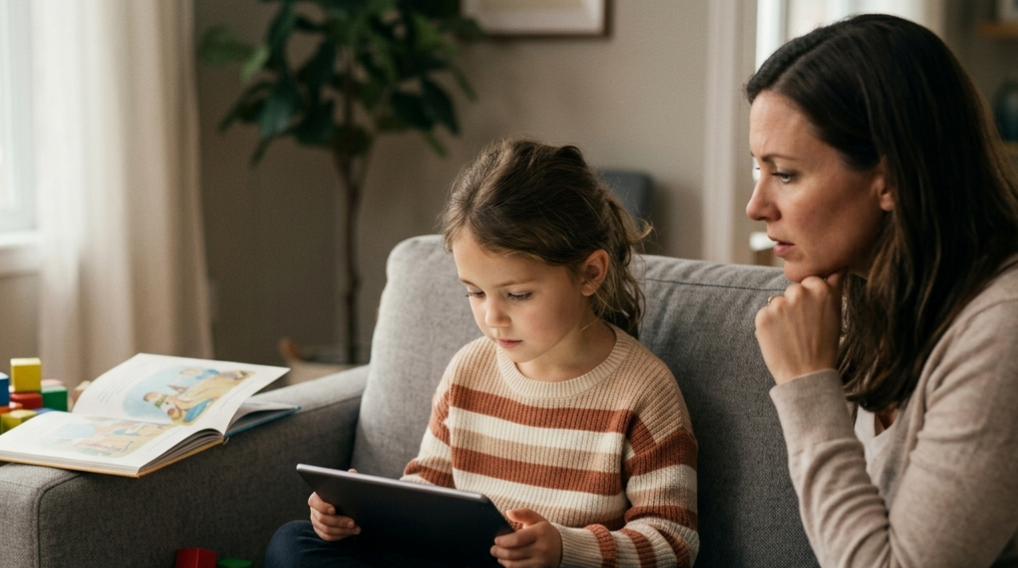
(10 Signs Your Child May Be Too Dependent on Screens)
Screens are now a normal part of childhood. Kids use tablets for school, watch cartoons after homework, play games with friends, and sometimes even use phones to relax before bed.
The problem isn’t that screens are automatically bad. The bigger concern is when a child starts relying on screens for almost everything—to stay calm, avoid boredom, fall asleep, or enjoy their free time.
Every child is different, so there isn’t one magic number of screen-time hours that determines whether there’s a problem. Instead, parents can pay attention to changes in behavior, sleep, relationships, and everyday routines.
Here are 10 signs that your child may be becoming too dependent on screens.
1. They Get Extremely Upset When the Screen Is Taken Away
Does turning off the TV or taking away the tablet regularly lead to shouting, crying, or major arguments?
Occasional frustration is completely normal. But if your child consistently has intense reactions whenever screen time ends, it may be worth looking at how strongly they depend on it.
Try giving a warning before screen time ends:
“You have 10 minutes left, then we’ll put the tablet away.”
A predictable routine can make transitions easier.
2. Screens Are Their First Choice for Everything
Kids naturally enjoy games, videos, and entertainment. However, you may want to pay attention if your child almost always chooses a screen over other activities.
For example, they might stop wanting to:
- Play outside
- Draw or build things
- ReadPlay with toys
- Spend time with family
- Visit friends
- Try new activities
The issue isn’t choosing a screen sometimes. It’s when other activities gradually disappear from their routine.
3. They Can’t Handle Boredom Without a Screen
Boredom is actually useful for children.When kids aren’t constantly entertained, they have opportunities to use their imagination, create games, solve problems, and discover new interests.
If your child immediately asks for a phone or tablet every time there is nothing to do, they may be becoming uncomfortable with ordinary boredom.Instead of immediately handing over a device, try saying:
“I know you’re bored. Let’s see what you can come up with.”
You don’t always need to provide entertainment for them.
4. Screen Time Is Affecting Their Sleep
Late-night screen use can interfere with a healthy bedtime routine, especially when children stay up watching videos or playing games.
You might notice that your child:
- Doesn’t want to go to bed
- Asks for “just one more video”
- Wakes up tired
- Has difficulty settling down
- Wants to use a device immediately after waking
Creating a screen-free wind-down period before bed can help make evenings calmer.
5. They Become Secretive About Screen Use
Another possible warning sign is when a child starts hiding their screen activity. They may use a device after you’ve said no, quickly close apps when you enter the room, or become unusually defensive when you ask what they’re doing.
This doesn’t automatically mean your child has a screen dependency. Children sometimes hide things simply because they know they’ve broken a rule.
Still, repeated secrecy is a good reason to have a calm conversation about screen habits rather than immediately turning the situation into a punishment.
6. Screens Interfere With Schoolwork
Homework doesn’t have to be every child’s favorite activity. But if your child’s screen use regularly causes them to delay, forget, or rush through schoolwork, it’s time to reconsider the routine.
Try separating entertainment from responsibilities.
For example:
Homework → Dinner → Play/Family Time → Screen Time
A predictable sequence helps children understand that screens are one part of the day—not the center of it.
7. Family Conversations Are Constantly Interrupted
Imagine sitting down for dinner, but your child keeps looking at a phone.
Or you’re talking to them, but they barely respond because they’re focused on a video.
When screens repeatedly interrupt conversations, meals, or family activities, they can gradually take attention away from real-world relationships.
Try creating a few simple screen-free zones, such as the dinner table or family conversations.
And remember: children learn from what they see. If parents keep checking their phones during meals, children will notice.
8. They Use Screens Whenever They’re Emotional
This is one of the most important signs to watch. If a child becomes upset and the immediate solution is always:
“Here, watch something.”
they may start learning that uncomfortable emotions should be escaped rather than managed.
Screens can certainly be used for relaxation, but children also need other coping skills.
When they’re upset, try helping them:
- Name the emotion
- Take a few deep breaths
- Talk about what happened
- Draw or write about their feelings
- Move their body
- Spend time with someone they trust
The goal isn’t to eliminate screens. It’s to give children more than one way to feel better.
9. They Need Increasingly More Screen Time to Feel Satisfied
You may notice that the amount of screen time that once felt exciting no longer seems enough.
Your child may constantly ask for another episode, another game, or another few minutes.
This can make boundaries increasingly difficult. Instead of negotiating every day, establish clear expectations ahead of time.
For example:
“You can use the tablet after your homework, and we’ll stop when the timer rings.”
Consistency is often easier for children than constantly changing rules.
10. Their Offline Life Is Getting Smaller
Perhaps the biggest thing to watch isn’t the exact number of hours your child spends looking at a screen.
It’s what screens are replacing.
Ask yourself:
- Is my child getting enough sleep?
- Are they physically active?
- Are they spending time with family?
- Are they maintaining friendships?
- Are they keeping up with school responsibilities?
- Do they still enjoy hobbies?
- Can they play independently?
- Can they handle periods without entertainment?
If most areas of their life are healthy, screen use may simply be one part of their routine.
But if screens are gradually replacing sleep, movement, relationships, hobbies, and responsibilities, it’s worth making changes.
The Goal Isn’t a Screen-Free Childhood
Technology is part of modern life, and children will eventually need to know how to use it responsibly. The goal isn’t to make screens the enemy. The goal is to help your child learn that screens are a tool and a form of entertainment—not the only source of happiness, comfort, or excitement.
If your child’s screen use is seriously affecting sleep, school, relationships, mood, or daily functioning, consider discussing your concerns with your child’s pediatrician or another qualified professional.
A healthy digital routine isn’t about perfection. It’s about helping children build a life that is enjoyable with or without a screen.
